
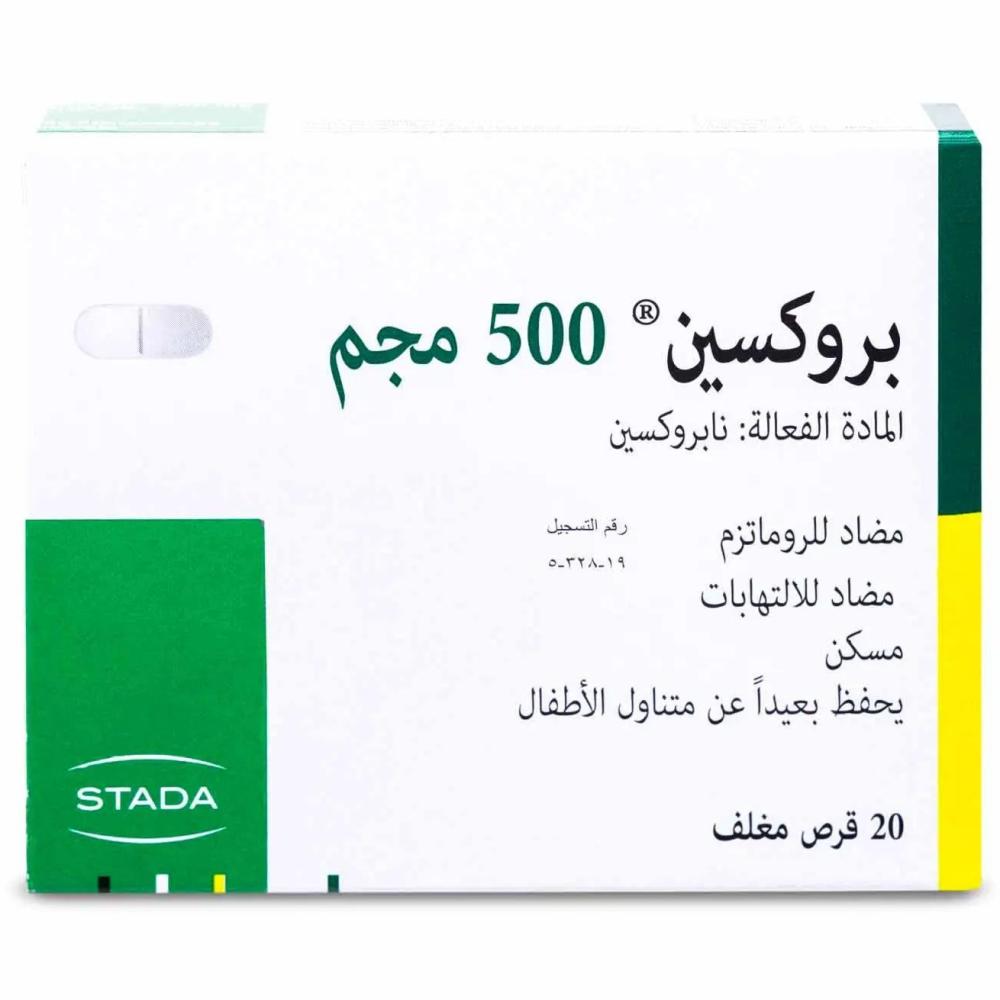
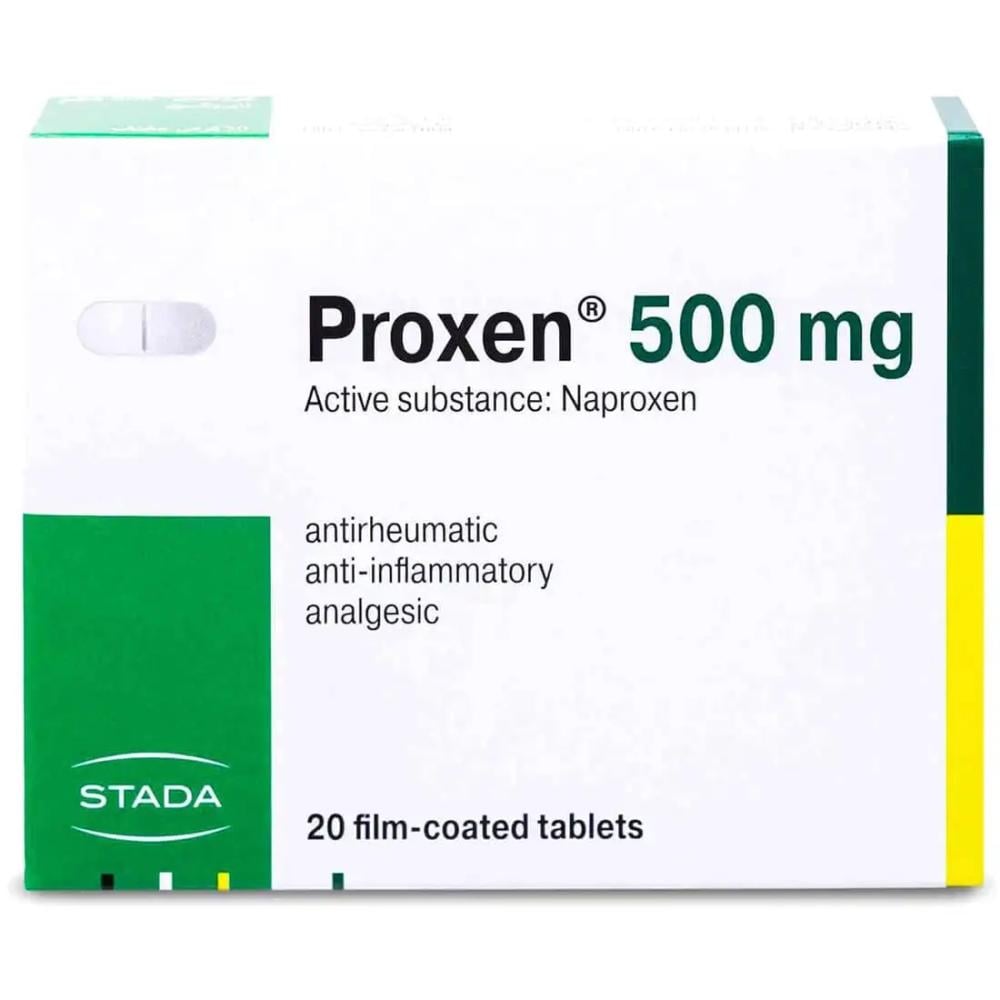
Mechanism of action of naproxen
- The main mechanism of action of NSAIDs is inhibition of the enzyme cyclooxygenase (COX).
- The enzyme cyclooxygenase is necessary for the conversion of arachidonic acid into thromboxanes, prostaglandins, and prostacyclins. These substances are produced by the body in response to disease and injury.
- Naproxen reduces pain, fever, swelling, and inflammation.
Indications for use of Proxin 500 mg tablets
- Joint diseases such as rheumatoid arthritis (including in children), osteoarthritis, and ankylosing spondylitis.
- Naproxen cannot cure arthritis but is used to relieve some symptoms such as inflammation, swelling, stiffness and joint pain.
- Gout attacks
- Musculoskeletal disorders
- painful periods
How to take Proxen 500 mg tablets
- Take as prescribed.
- Swallow with or after food.
- Adults:
- Rheumatoid arthritis, osteoarthritis, ankylosing spondylitis: 500 mg - 1 g daily in two doses at twelve-hour intervals.
- Gout attack: Initially 750 mg as a single dose, then 250 mg every 8 hours until the attack is over.
- Musculoskeletal disorders and painful periods: Initially 500 mg as a single dose then 250 mg every 6-8 hours as necessary.
- Use in children and adolescents Children over 5 years of age for juvenile rheumatoid arthritis: 10 mg per kg of body weight daily
- Doses may change under certain circumstances, so always follow your doctor or pharmacist's instructions.
- If you take more than you should, talk to a doctor or go to the hospital immediately.
- If you miss a dose, take it as soon as you remember unless it is almost time for your next dose.
- Do not take a double dose (two doses at the same time) to make up for a missed dose.
Unwanted side effects of Proxen 500 mg tablets
- Common side effects:
- headache
- dizziness
- Fatigue
- Stop taking naproxen if:
- You have indigestion, heartburn, stomach pain or other abnormal stomach symptoms, feeling sick or feeling ill, diarrhea, worsening of colitis, Crohn's disease (you may have an ulcer or inflammation of the stomach or intestines)
- You pass blood in your stools (stools/movements) or black stools (signs of bleeding and perforation of the stomach and intestines)
- Vomiting any blood or dark particles that look like coffee grounds
- You have an allergic reaction: swelling of the face, difficulty breathing